Official inflation numbers are ticking down, but American families aren’t celebrating. Behind the government’s data sheet lies a different story — one that’s reshaping how households spend, save, and struggle. Here’s what’s really driving the cost-of-living crunch and what the Fed might do next.
The Cooling That Doesn’t Feel Cool
The headlines say inflation is easing. The latest Consumer Price Index (CPI) report shows prices rising at an annual pace of 2.9%, down sharply from the 9% peak that rattled the economy in 2022. But walk through any grocery aisle or open your latest utility bill, and it’s hard to believe things are getting cheaper.
For most Americans, relief has yet to arrive. Rent remains stubbornly high, insurance premiums are up, and companies show little interest in lowering prices they hiked during the pandemic. The reality: even as inflation “cools,” the burn lingers — because prices rarely fall back to where they started.
What the Data Really Shows
According to the December CPI report, headline inflation slowed slightly, with energy prices dropping after months of volatility. Food inflation decelerated but still rose 3.6% year over year, while core inflation — which excludes food and energy — remained sticky at 3.1%.
The Federal Reserve, after holding rates steady for the fourth consecutive meeting, hinted at possible rate cuts later in 2026 if inflation continues to cool. In a press briefing, Chair Jerome Powell said the central bank is “encouraged but cautious,” emphasizing the need for sustained progress toward the Fed’s 2% target.
Financial markets reacted instantly — stocks rallied, but mortgage rates held steady around 6.7%, reflecting ongoing skepticism that high borrowing costs will meaningfully fall soon. In short, the numbers look promising, but the everyday economy tells a more complicated truth.
The Real Impact: Why It Still Hurts
Everyday Prices, Stubbornly High
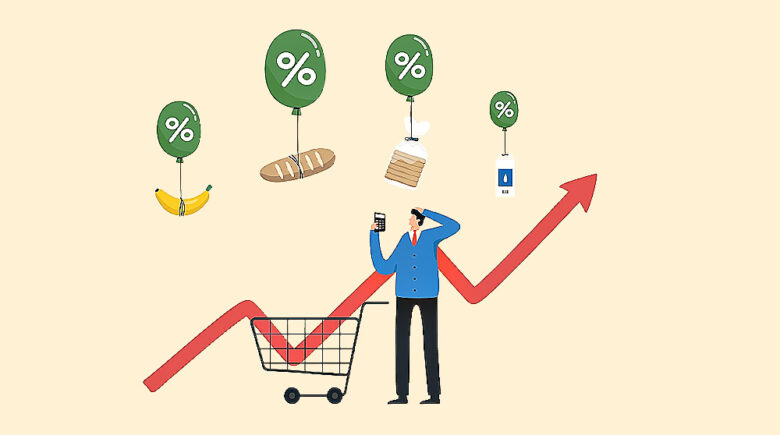
While inflation’s rate has slowed, its effect hasn’t reversed. If your grocery bill jumped 10% in 2022, another 3% this year still means you’re paying more each month. The Labor Department notes that since 2020, food-at-home prices are up nearly 25% overall. That’s not inflation moderation — that’s a permanent reset.
It’s not just groceries. Average car insurance costs rose 20% in 2025, health premiums are climbing faster than wages, and even “discount” retailers have trimmed package sizes rather than prices — the classic “shrinkflation” trick that quietly raises costs without raising eyebrows.
The Wage-Price Tension
Wages have risen too, but not evenly. Federal data shows average hourly earnings grew 4.1% in 2025, barely keeping up with core inflation. Lower-income workers — those spending more of their paycheck on essentials — feel the squeeze most.
This wage-inflation lag creates what economists call “perceived inflation”: the psychological gap between what the data says and what wallets feel. When your rent jumps by hundreds but your raise is just enough to cover gas, no chart can convince you the system’s working.
The Ripple Effects on Debt and Savings
The Fed’s rate hikes may have tamed inflation, but they’ve unleashed another burden — expensive debt. Credit card APRs now average over 21%, the highest in decades. U.S. households collectively owe $1.35 trillion in credit card debt, according to the New York Fed’s latest report.
Meanwhile, savings rates have cratered. The pandemic-era cushion that once buoyed families is largely gone, replaced by rising balances on variable-rate loans. Consumers aren’t spending freely — they’re stretching to maintain the same standard of living.
What Happens Next
Economists are cautiously optimistic that inflation will keep easing through 2026, with headline rates potentially falling below 2.5% by midyear. But no one expects prices to revert to pre-pandemic levels. “The era of cheap everything is over,” says Lydia Boussour, senior economist at EY-Parthenon. “Even if inflation is under control, structural costs — labor, housing, supply logistics — have shifted permanently.”
The outlook for interest rates remains mixed. If the Fed cuts too soon, price pressures could reignite; if it waits too long, growth could stall. Wall Street now expects two small rate cuts later this year, but any move will depend on sticky housing and wage data.
For consumers, that means continued high costs for borrowing — from mortgages to car loans — even as inflation technically declines. Businesses, too, face thinner margins as consumers pull back, raising fears of a mild slowdown later in 2026.
A ‘New Normal’ Economy
Inflation may finally be under control on paper, but for households, the scars are still fresh. The past few years redefined what “normal” prices mean — and there’s no going back. The test for 2026 isn’t whether inflation cools another fraction of a point but whether real wages, consumer confidence, and affordability can finally catch up.
Until that day, the cooling won’t feel cool — it’ll just feel different.